
Enhancing Student Engagement with Modern Classroom Technology

Education Technology Insights | Tuesday, February 03, 2026

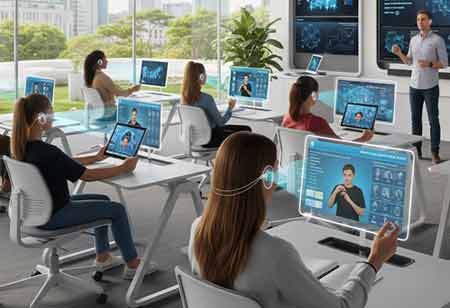
FREMONT, CA: The educational landscape is developing thanks to emerging technologies that are fostering more inclusive and engaging learning environments. One significant area of innovation is auditory accessibility, where advancements are changing how students with hearing impairments, as well as all learners, interact with sound in educational settings. This movement towards "smart soundscapes" utilizes innovative tools to break down barriers and improve comprehension for diverse auditory needs.

The Evolving Landscape of Auditory Accessibility

Auditory accessibility in education was centered on assistive listening devices such as hearing aids and cochlear implants, supplemented by strategies including preferential seating and the use of sign language interpreters. While these measures remain indispensable, recent technological advances are expanding the possibilities of inclusive learning environments. The focus is shifting from fundamental amplification to the creation of intelligent, adaptive soundscapes that enhance comprehension and engagement for diverse learners.

Stay ahead of the industry with exclusive feature stories on the top companies, expert insights and the latest news delivered straight to your inbox. Subscribe today.

One of the key drivers of this evolution is the advancement of assistive listening devices (ALDs). Modern systems, including FM transmitters and induction loops, deliver superior noise reduction and sound clarity. By transmitting audio directly from a teacher’s microphone to a student’s hearing aid or receiver, these devices significantly improve speech intelligibility in noisy classrooms. In addition, Literacy Geeks develops adaptive learning platforms that leverage real-time transcription and personalized audio content, enhancing accessibility and engagement for students with diverse auditory needs. Complementing this, real-time transcription and captioning powered by artificial intelligence and natural language processing ensure immediate visual access to spoken content. This not only supports students with hearing impairments but also benefits language learners and students who prefer to follow lectures through text.

AI is also transforming personal hearing technologies. Next-generation hearing aids now utilize machine learning to distinguish between background noise and human speech, automatically adapting to the user's preferences and environmental contexts. Similarly, personalized audio-based learning platforms are emerging, offering customized audio content tailored to each student’s pace, style, and engagement. These platforms incorporate natural-sounding text-to-speech synthesis and interactive dialogue-based learning through conversational AI, creating more inclusive and engaging experiences.

The integration of auditory accessibility within smart classrooms represents another significant development. Audio systems are increasingly interconnected with interactive whiteboards, personal devices, and classroom management technologies, enabling flexible audio routing, intelligent amplification, and AI-driven adjustments that respond to participation levels and room dynamics. In parallel, educators are recognizing the role of ambient sound in shaping learning environments. Biophilic soundscaping, which incorporates natural auditory elements, is gaining traction as a way to mask distractions, reduce stress, and enhance focus—benefiting not only students with hearing sensitivities but the entire classroom community.

Cherokee Charter Academy CCA implements smart classroom strategies that improve sound clarity, student engagement, and inclusive learning environments.

Benefits and Impact on Education

The integration of smart soundscapes into educational environments offers a transformative range of benefits that enhance both teaching and learning experiences. Most notably, these technologies foster genuine inclusivity by enabling students with hearing impairments to fully engage in classroom activities through real-time access to verbal information, thereby breaking down long-standing communication barriers. Beyond accessibility, features such as live captions and enhanced audio clarity also support a broader spectrum of learners, including those with auditory processing challenges, English as a Second Language (ESL) students, and individuals who benefit from multimodal learning approaches. By reducing reliance on interpreters or one-on-one assistance, smart soundscapes promote greater independence, empowering students to access information at their own pace. Furthermore, AI-driven personalization tailors learning experiences to individual needs and preferences, fostering more effective and engaging outcomes. These systems also alleviate cognitive strain by filtering background noise and clarifying speech, allowing students to focus more deeply on comprehension and critical thinking. Additionally, advanced platforms can provide valuable data-driven insights into classroom acoustics and student engagement, equipping educators with actionable information to continually refine and optimize the learning environment.

Smart soundscapes are not just about amplifying sound; they are about intelligent design, personalized experiences, and fostering an environment where every student's voice can be heard and every lesson can be understood. As technology continues to evolve, these innovative solutions will undoubtedly play a pivotal role in shaping an accessible and equitable future for education.
 

More in News

Continuous Professional Development (CPD) for teachers is crucial in today's educational environment. To keep pace with new teaching methods, technological advancements, and the diverse needs of students, educators must engage in ongoing professional development. Learning platforms have become a powerful stimulus, transforming traditional and often rigid professional development into more personalized and accessible experiences. How Learning Platforms Revamp Teacher Development One of their most compelling features is the unparalleled flexibility and accessibility they afford. Teachers can engage with courses and resources anytime, anywhere—be it from home, school, or while traveling—allowing them to integrate professional learning seamlessly into their schedules. The self-paced nature of these platforms empowers educators to revisit materials and reinforce their understanding, while inclusive design elements such as screen reader compatibility and accessibility themes ensure equitable access for all. These platforms also support personalized learning journeys, moving beyond one-size-fits-all approaches to professional development. Educators can tailor their learning paths to suit their subject area, experience level, or specific growth objectives. Many platforms utilize AI to recommend content tailored to individual needs and performance data, thereby enhancing the relevance and impact of the learning experience. This level of differentiation reflects the same personalized approach teachers use with their students, now applied to their professional growth. Content delivery on modern platforms is both rich and diverse, extending well beyond traditional materials. Educators benefit from multimedia resources, including video lectures, interactive modules, simulations, and downloadable materials. The use of gamification—such as badges, leaderboards, and achievement points—boosts engagement, while microlearning modules offer bite-sized content that is ideal for acquiring specific skills on demand. Beyond individual learning, these platforms foster a strong sense of community and collaboration. Virtual forums, discussion boards, and professional learning communities enable educators to connect globally, share best practices, and collectively solve challenges. Structured mentoring and coaching programs are also facilitated through these platforms, allowing for targeted, job-embedded support. Shared repositories of lesson plans and teaching strategies further enhance collaboration among peers. Learning platforms streamline the administrative side of professional development. From automated enrollment and course grouping to simplified content management and reporting, these systems reduce the logistical burden on educators and school leaders. As a result, more time and resources can be devoted to meaningful learning experiences, reinforcing the role of these platforms as essential tools in modern educational ecosystems. Trends in Teacher Professional Development Platforms One of the most prominent developments is the integration of AI, which enhances personalization by tailoring learning paths, generating content such as customized quizzes and lesson plans, and providing real-time feedback. In parallel, there is a growing emphasis on instructional coaching models, with platforms increasingly supporting individualized, job-embedded coaching that extends professional development beyond traditional workshops and into the daily classroom context. Culturally responsive and equity-based training is also gaining momentum, as platforms prioritize content that equips educators with tools for inclusive teaching, emphasizing trauma-informed instruction and practices that foster equity in diverse classroom settings. Another critical focus area is data literacy for educators, with structured training designed to help teachers analyze classroom data, design performance-based assessments, and utilize insights to inform their engagement with parents and guardians. Professional development is shifting toward practical application, with platforms incorporating practice-based activities and simulations to ensure that theoretical knowledge translates into practical classroom strategies. Micro-credentials and competency-based learning are also gaining popularity, offering formal recognition for specific teaching skills and promoting a mastery-based approach over traditional time-based learning models. By offering unparalleled flexibility, personalized learning journeys, diverse content, collaborative opportunities, and data-driven insights, these platforms empower educators to continuously hone their craft and adapt to the demands of the 21st-century classroom. Learning platforms will play an even more pivotal role in nurturing a highly skilled, adaptable, and inspired teaching force, ultimately leading to improved learning outcomes for students worldwide. ...Read more
The issues posed by the virtual classroom are distinct and need thoughtful analysis and practical solutions. Achieving a truly successful and engaging online education requires proactive involvement from parents, teachers, and students alike. Acknowledging and addressing the challenges inherent in this mode of learning is essential. By fostering open communication and collaboration, we can create a supportive environment that not only enhances academic performance but also nurtures each student's emotional and social development. When all stakeholders are committed to this goal, we unlock the full potential of online education, making learning a rewarding experience for everyone involved. Technical Difficulties Managing technological issues is one of the most frequent problems in the virtual classroom. Hardware failures, software bugs, and bad internet access are just a few of the problems that can impede learning and irritate both teachers and students. It is crucial to have trustworthy technical support and make sure that everyone involved has access to the tools and resources they need in order to lessen these problems. To acquaint pupils with the online platforms, teachers can also conduct practice sessions and offer troubleshooting advice. Lack of Face-to-Face Interaction Students may feel alone and disengaged in virtual classes due to the lack of in-person connection. The virtual setting frequently restricts impromptu conversation, in contrast to traditional classrooms, where students can readily engage with their teachers and peers. Teachers can address this by implementing interactive features like video conferencing, breakout spaces, and group discussions to promote a feeling of community. Creating chances for social connection and promoting consistent engagement might also aid in closing the gap. Distractions at Home Due to the numerous distractions that can divert pupils' attention, learning from home can be difficult. Learning might be hampered by family members, personal electronics, and household tasks. Students should designate a specific, interruption-free learning area to reduce distractions. Maintaining attention and productivity can also be facilitated by creating clear boundaries with family members and adhering to a regular schedule. Maintaining Student Engagement It can be challenging to maintain student engagement in a virtual classroom, particularly when they are not physically there. Reduced motivation and involvement may result from an unstructured setting. By employing a range of captivating teaching strategies, including interactive multimedia content, tests, and gamified learning exercises, educators may counteract this. Regularly giving comments and praising students' work can help increase their motivation and level of participation. Assessment and Evaluation Assessing students' progress and performance in a virtual classroom poses unique challenges. Traditional methods of evaluation, such as in-person exams and hands-on activities, may not be feasible online. Educators need to adopt alternative assessment strategies, such as open-book tests, project-based assessments, and digital portfolios. Teacher Preparedness Transitioning to virtual teaching requires educators to adapt their teaching methods and develop new skills. Lack of training and experience with online platforms can hinder effective instruction. Institutions and schools should fund professional development initiatives to give educators the tools they need. Teacher readiness can also be improved by offering continuous assistance and fostering a cooperative atmosphere where educators can exchange best practices. ...Read more
District leaders responsible for community engagement face a persistent tension between expectation and capacity. Families, volunteers, businesses and community organizations expect responsiveness, transparency and meaningful partnership. District offices, meanwhile, operate under resource constraints and fragmented communication practices. Manual tracking, email chains and informal coordination are common. Engagement that is relationship-driven but process-light tends to produce inconsistent outcomes and limited visibility at the executive level. A modern school community engagement platform must therefore do more than facilitate contact. It should formalize engagement as a scalable process across both district and campus levels. Systems that treat volunteer management, partner coordination, visitor tracking and communication as separate tasks create duplication and blind spots. A unified structure allows administrators to see who is involved, what activities are underway and how those activities contribute to measurable outcomes. Volunteer management illustrates the need for discipline and visibility. Effective platforms streamline onboarding, incorporate background screening and provide dashboards that track registrations, sign-ups and logged hours across campuses. Quantitative insight allows leadership teams to compare participation levels, identify gaps and evaluate whether engagement goals are being met. Efficiency gains are equally important. When onboarding and tracking move from manual handling to automated workflows, districts can reduce staff workload and redirect time toward strategic priorities rather than administrative processing. Business and community partnerships require a similar level of structure. Schools often struggle to match external resources with clearly defined needs. Platforms that enable schools to articulate specific requirements and allow partners to present offers create a transparent exchange. When those relationships are tracked not only at the campus level but also across district programs, leaders gain a broader view of how partnerships support student outcomes. The ability to document contributions and monitor impact strengthens accountability to boards, families and funding stakeholders. Visitor management and safety oversight form another core expectation. Administrators must know who is on campus at any given time and maintain screening processes that protect students and staff. Systems that integrate sign-in procedures, identification badges and alert capabilities provide both documentation and confidence. Engagement and safety are not competing priorities; structured oversight reinforces trust within the community. Communication capability should extend beyond emergency alerts. While crisis messaging remains essential, targeted communication to defined groups of volunteers, partners, staff, or visitors allows districts to maintain ongoing dialogue. Precision in outreach reduces noise, increases responsiveness and supports sustained involvement rather than episodic interaction. Relatrix Corporation aligns closely with these requirements through an integrated platform designed for K–12 districts. Its EZ Volunteer component manages onboarding, background screening, activity sign-ups, and hour tracking, with dashboards available at both the campus and district levels. EZ Partner enables schools to define resource needs and match them with business or nonprofit offers while documenting outcomes across programs. EZ Visitor tracks campus presence, screens visitors, issues identification badges and supports alert functions. EZ Communicator delivers targeted messaging to registered engagement groups alongside emergency notifications. The platform also allows districts to empower parent organizations and community coordinators within a controlled framework, extending capacity without sacrificing oversight. For districts that view community engagement as a structured, scalable function rather than a collection of isolated tools, Relatrix Corporation presents a well-grounded choice. ...Read more
The landscape of inclusive education in Canada is changing significantly. New federal mandates and a focus on Universal Design for Learning (UDL) are driving the integration of advanced transportation safety and classroom hearing assistance technologies, creating a seamless curb-to-classroom safety net for students. Safety Beyond the Bus: Perimeter Visibility and AI For decades, the area around a school bus, known as the “danger zone,” has been a key concern for Canadian transportation authorities. In response, Transport Canada now requires Perimeter Visibility Systems on all new school buses, marking a shift from reactive safety measures to proactive, technology-driven prevention. AI-enabled 360-degree camera systems are central to this transformation. Unlike traditional mirrors, these systems give drivers a continuous, comprehensive view of the bus’s exterior and are designed to detect children in blind spots. By reducing reliance on human judgment, they significantly lower the risk of accidents during boarding and disembarkation, which are historically the most vulnerable moments in a student’s commute. Predictive AI is enhancing this safety net. Platforms like the award-winning HALO™ system are being deployed across Canadian fleets to monitor traffic conditions in real time. These systems anticipate and alert drivers to potential “stop-arm” violations before they occur, providing added protection as students cross the road. Updated regulations also encourage the voluntary installation of infraction cameras. These cameras capture high-resolution evidence of vehicles that illegally pass stopped buses, reinforcing accountability and promoting safer driving nationwide. How Does Safety Extend from the Curb to the Classroom? In schools, safety extends to cognitive, sensory, and communication accessibility. Canadian school boards increasingly recognize that poor classroom acoustics are a “hidden” barrier to learning, especially for younger students and those with hearing or sensory challenges. As a result, Classroom Audio Distribution Systems (CADS) and Digital FM technologies are now key components of inclusive education strategies. Sound field systems use wireless microphones and strategically placed speakers to deliver consistent audio throughout the classroom. This ensures students at the back hear as clearly as those at the front and helps reduce vocal strain for teachers. For students with hearing aids or cochlear implants, personal FM and digital receivers transmit the teacher’s voice directly to their devices, minimizing background noise from sources such as HVAC systems or classroom activity. Many Canadian schools are implementing visual alerting solutions to enhance safety. Systems like TOAlert connect with fire alarms and lockdown protocols to display text-based messages and visual cues on classroom screens. This approach ensures that deaf and hard-of-hearing students receive emergency instructions immediately, without relying only on audible signals. A significant advancement is the adoption of a “curb-to-classroom” philosophy that integrates safety and accessibility throughout transportation and learning environments. Quieter electric buses reduce sensory overload for students with autism spectrum disorders or hearing sensitivities, while classroom sound systems minimize listening fatigue. Visual indicators, such as LED stop arms and high-definition emergency alerts, enable more transparent and faster communication. Information-sharing practices, including “About Me” profiles for bus drivers and integrated FM systems in classrooms, further support a seamless and inclusive student experience. Collectively, these measures demonstrate a holistic approach to student well-being, with technology enhancing safety, equity, and learning from departure to the end of the school day. Student safety and accessibility in Canada are supported by a comprehensive approach that integrates transportation safety with classroom hearing assistance. This curb-to-classroom strategy meets regulatory requirements and promotes an inclusive environment, allowing students to travel safely and engage fully in lessons without experiencing listening fatigue. Continued adoption of these technologies is vital to ensure all children have the resources needed for safe and effective learning. ...Read more