

THANK YOU FOR SUBSCRIBING

× 
Education Technology Insights Weekly Brief
Be first to read the latest tech news, Industry Leader's Insights, and CIO interviews of medium and large enterprises exclusively from Education Technology Insights
In many schools, educators are balancing academic instruction with the need to intentionally build student connection within limited time, fixed schedules, and existing MTSS structures. Advisory periods, seminars, intervention blocks, and small-group supports are increasingly asked to address attendance, motivation, behavior, and readiness for life beyond graduation. The challenge is not whether social and emotional support belongs in schools, but how to deliver it in structured, scalable ways that fit daily practice and produce measurable impact. What is the challenge of integrating social and emotional support into schools? School-Connect emerged from this classroom reality with a practical premise shaped by years of research and educator experience: structured connectedness and skill-building embedded into regular school routines serve as a foundation for student success. When students have consistent opportunities to reflect, communicate, build relationships, and develop skills essential to success within the school day, it supports attendance, motivation, goal-setting, healthier technology habits, and readiness for life after graduation. Rather than treating social and emotional development as a separate initiative, the program integrates scaffolded skill-building directly into instruction to strengthen learning and long-term outcomes. Founded with a research-informed approach, School-Connect’s structured curriculum and tools help students build relationships and develop life skills through clearly sequenced lessons that educators can facilitate with minimal preparation. Its programs align with MTSS frameworks and support schools in addressing universal needs and targeted interventions. Each component is designed to be preventive and developmental, giving students structured time to reflect, communicate, and set direction before challenges escalate. Flexibility is central to how it operates. School-Connect works with public, private, and charter schools of all sizes, adapting to a wide range of learning environments. Its curriculum can be implemented schoolwide through advisory periods or dedicated classes, while also supporting Tier 2 and Tier 3 interventions through small-group and one-on-one instruction. This allows schools to address attendance concerns, classroom disruption, academic motivation, trauma-informed needs, and support for students with IEPs or inconsistent attendance across tiers.

Software and Technologies
How does Mastery Coding embed computer science across K–12 education systems? Computer science is no longer an optional literacy — it is foundational education. Mastery Coding was built to embed that foundation into every K–12 classroom, making emerging technology education accessible, rigorous, and scalable across districts nationwide. While not every student will become a software engineer, every student deserves fluency in the digital systems shaping modern life. Mastery Coding partners with schools to deliver structured, standards-aligned pathways that meet learners where they are — supporting both technical and creative students within a unified system. The result is measurable skill development, real-world relevance, and expanded opportunity. “Engagement without rigor isn’t enough,” says Alan Sitomer, Chief Executive Officer. “We connect students’ passion for technology and gaming to workforce-aligned skills that open real career pathways.” The platform blends guided instruction with project-based learning, empowering students to build, test, and apply knowledge in authentic contexts rather than memorize isolated concepts. From foundational coding to advanced applications, students develop tangible competencies while teachers benefit from a streamlined system designed for practical classroom implementation..

Curriculum Platform and Software

How can esports be structured to support academic growth? Esports has become one of the fastest-growing youth activities in the country. The United States Academic Esports League (USAEL) is redefining what it means for schools — transforming competition into a structured pathway for academic growth, leadership development, and career readiness. Founded by Adam Rosen, a pioneer in collegiate esports, the USAEL was built on a clear principle: if esports is to create lasting value in schools, it must be grounded in academic structure. Rosen began organizing collegiate esports in 2010, later founding Tespa, which grew into a national league spanning more than 1,200 colleges and universities before its acquisition by Blizzard Entertainment, where he led esports initiatives for several years. That experience shaped a belief that esports could extend beyond elite competition to become an educational infrastructure. What distinguishes USAEL’s curriculum-driven esports model in K–12 schools? The USAEL embeds esports within a curriculum-driven framework designed for K–12 environments. Rather than treating gaming as an extracurricular activity, the league integrates it into the school day through adoptable coursework in esports careers, broadcasting, marketing, and game development. Students gain technical knowledge alongside collaboration, communication, and leadership skills — competencies aligned with college and workforce expectations..
Cloud School Software Solution
Each school day brings new opportunities to support students and strengthen school communities. For small- to medium-sized schools such as charter schools, religious institutions or independent institutions, keeping things running smoothly depends on having simple, reliable tools tailored to their needs. This is where EZ School Apps makes a meaningful difference. EZ School Apps offers a unified platform with four core solutions, comprising school lunch ordering, substitute management, after-school care and school payments. These solutions are designed to reduce a school’s administrative burden without adding complexity or cost, filling critical functionality gaps in traditional student information systems (SIS). Used by over 2,000 schools, the platform has supported educators for 12 years by reducing workload and making everyday tasks easier to manage. A Platform Developed Around Real Needs As many small schools do not have the infrastructure to support a cafeteria, they often rely on external meal providers. To make this seamless, EZ School Apps enables parents to place meal orders online, make payments digitally and have meals delivered from third-party providers. Depending on the arrangement, schools can also submit the orders to providers through the software. “Most schools start by using a single solution, such as the lunch ordering app, and once they see its value they adopt additional tools,” says Matt Stockbridge, CEO. “With a single login, parents and admin can access multiple applications across schools, making the entire process efficient.”

AI Counseling Assistant
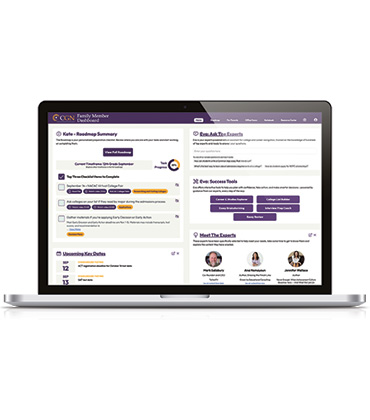
High school guidance has a math challenge and AI can help. Families need support all year long but schools are only in session 180 days a year. In addition, for generations, students and families navigating the college and career process have struggled with uncertainty, confusion, and stress. College affordability, AI and job disruption is putting this into overdrive. The stakes are increasing, and reliable guidance has often been accessible only to those who could afford costly private counseling. College Guidance Network (CGN) was created to change that reality. By pairing the power of AI with the wisdom of hundreds of national experts, CGN has built a unique counseling solution designed to support families, schools, and colleges at every step of the journey. CGN AI is different from ChatGPT on many levels. It is trained by experts and gives relevant handouts in responses the way a real counselor would do. Personalized starter questions, library of AI college and career tools, and integration into a personalized project plan all make CGN AI best in class. AI Trained by Top Experts: At the center of CGN’s platform is Eva, its AI counseling assistant that draws on the knowledge of more than 400 leading experts, including well-known figures such as Malcolm Gladwell, Sal Khan of Khan Academy, and Angela Duckworth, author of Grit. It also incorporates the insights of college presidents, education policy leaders, and industry executives who understand both the present and future of work. Through this collective expertise, Eva provides families with trustworthy, nuanced guidance that stands apart in a crowded field. What makes Eva powerful is the way rigorous training meets real-world range, allowing it to move seamlessly from workplace dilemmas to personal struggles. No single guidance counselor can match its breadth. Eva helps families manage five core areas that define the postsecondary journey, including admissions strategy, financial aid and affordability, career pathways, parent-teen communication, and the impact of AI on future jobs. From choosing where to apply to understanding how technology will reshape career choices, Eva offers personalized starter questions, insights that are timely, comprehensive and relevant, and a suite of AI tools like a college list builder, job interview coach, and essay feedback tool.
Software and Technologies

Inclusion and Change in Information Security
Angel Howard, Chief Information Security Officer, Georgia Southern University
Student Information

The Future of Student Performance Prediction is Data-Driven Analytics
Eitel Lauria, Director of Graduate Programs, School of Computer Science and Mathematics, Marist College
Student Engagement

Driving Student Success and Experiential Learning at UNC Charlotte
Janaka Bowman Lewis, Professor, Associate Dean of Curriculum and Student Success, University of North Carolina, Charlotte
STEM

Beyond Theory and Into Monday Morning: Enhancing Graduate Programs for Teachers
Dr. Kathryn Annie Arnone, Department Head of Advanced Graduate Programs in Curriculum and Instruction, Lindenwood University
Software and Technologies

NetEmulator™ Launches with Strong Momentum
Pierre Askmo, CEO, the LabHUB™ NetEmulator™

IN MY OPINION
Student Engagement
Bridging the Digital Divide for Formerly Incarcerated Students: A Project Rebound Model for Technology Access and Academic Success
Dr. Sarah Ellison, Associate Vice President of Student Affairs and Dr. Khou YangVigil, Executive Director, Center for Academic Access and Student Enrichment, Sonoma State University

LAST WORD
Software and Technologies
Reframing Fidelity Toward Freedom in Teaching
Rebecca Tompkins, Director of Curriculum, Sycamore Community Schools
IN FOCUS

Institutional Alignment: A New Paradigm for K-12 Computer Science Platforms
The market is shifting toward durable, institutionally aligned platforms that deliver long-term value through stability, trust, and strategic integration.

Transforming Curriculum Markets: The Role of Evidence and Accountability
Heightened accountability, procurement scrutiny, and performance expectations are restructuring competition, compelling providers to anchor growth in validated institutional impact.
EDITORIAL
Structured Pathways for Measurable Student Success
Academic technology is increasingly evaluated not by novelty, but by demonstrable outcomes. As districts balance instructional rigor with student engagement, solutions must integrate seamlessly into daily practice while producing measurable impact across academic, behavioral and workforce readiness goals. This edition of Education Technology Insights highlights organizations building structured systems that connect learning, motivation and long-term success.
At the center of this issue, School-Connect is recognized as Top Evidence Based Curriculum and Tools 2026. Designed to embed social, emotional and life skill development directly into advisory periods and MTSS frameworks, the program provides sequenced lessons, embedded videos and project-based assessments that fit existing school schedules. Its preventive and developmental model supports universal instruction alongside Tier 2 and Tier 3 interventions, reducing preparation time while strengthening attendance, goal-setting and student engagement.
Expanding technical fluency in K–12 settings, Mastery Coding is recognized as Top K-12 Computer Science Curriculum Platform 2026. The platform integrates standards-aligned computer science, academic esports and project-based learning into scalable district pathways that connect engagement with industry-recognized credentials. Students move from foundational coding to advanced applications while building portfolio-ready artifacts aligned with workforce expectations. Complementing this approach, the United States Academic Esports League is recognized as Top Esports Curriculum & Competition Platform 2026. By embedding esports into structured coursework and supervised competition, USAEL transforms students’ passion into leadership development, technical competency and measurable academic growth.
Leadership insight reinforces these themes. Eitel Lauria, Director of Graduate Programs at the School of Computer Science and Mathematics, Marist College underscores the importance of predictive modeling and consistent data collection to improve early detection of academic risk. Janaka Bowman Lewis, Professor, Associate Dean of Curriculum and Student Success at University of North Carolina at Charlotte emphasizes community-engaged curriculum and intentional AI literacy that prepares students for digital citizenship and realworld engagement.
Across evidence-based curriculum, technical skill-building and datainformed leadership, structured integration defines sustainable progress. We invite readers to explore how disciplined design and measurable implementation are shaping the next phase of education technology.
